A settlement, then a watch-post
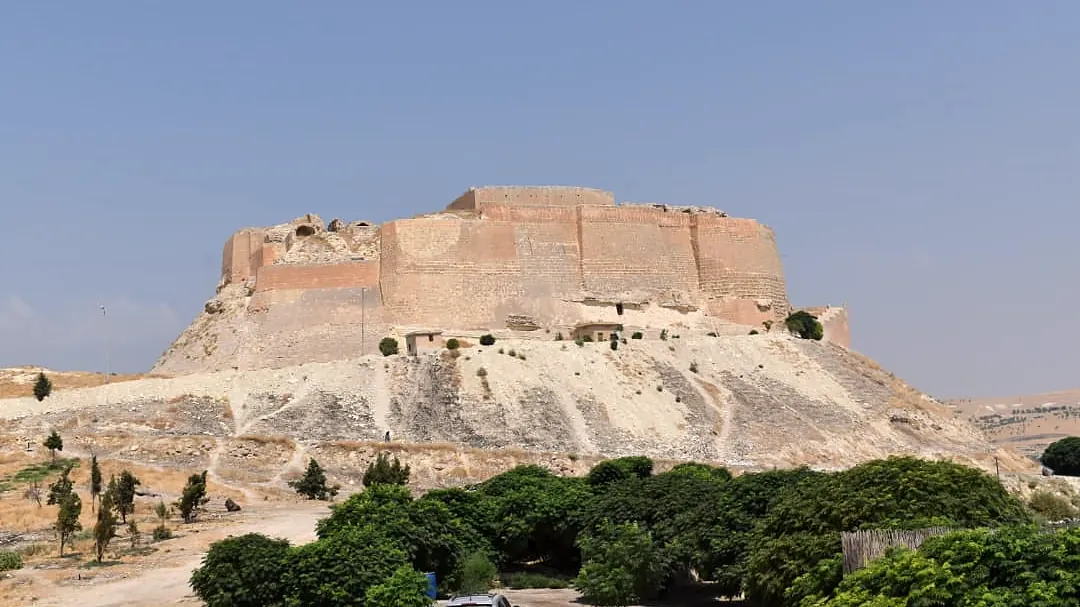
The castle stands on the remains of an older settlement, over which a watch-post was raised in the Roman and Byzantine periods. The place has been suggested as the Roman Caeciliana, though the identification is not settled.
Jisr Manbij — the bridge of Manbij
The oldest name the Arabic sources give this place is not Najm but Jisr Manbij. The caliph Uthman is said to have had a bridge built across the Euphrates here, carrying the road from Aleppo towards Harran.
Najm, of Marwan's command
The Directorate's file records that the castle takes its name from Najm, described there as a commander of Marwan ibn Muhammad, the last Umayyad caliph, who is said to have built it. The published record outside the file does not corroborate the man.
The fortress matters
The place emerges as a fortress of consequence after the Hamdanid victory of 941. From here the Hamdanids, and the Mirdasids after them, watch the crossing.
A tribal stronghold
Control passes to the Banu Numayr, who hold the rock as a stronghold into the twelfth century. It is in this period that the name Najm comes into general use.
Nur al-Din rebuilds
Nur al-Din Mahmud Zangi, ruler of Aleppo, has the fortress rebuilt — the work following an earthquake in the northern Levant.
Al-Zahir Ghazi takes it
Al-Zahir Ghazi, Saladin's son and governor of Aleppo from 1186, campaigns into the Jazira and takes Manbij, Qal'at Najm and Qal'at Ja'bar. He refortifies what he has conquered.
Seven years, and an inscription to say so
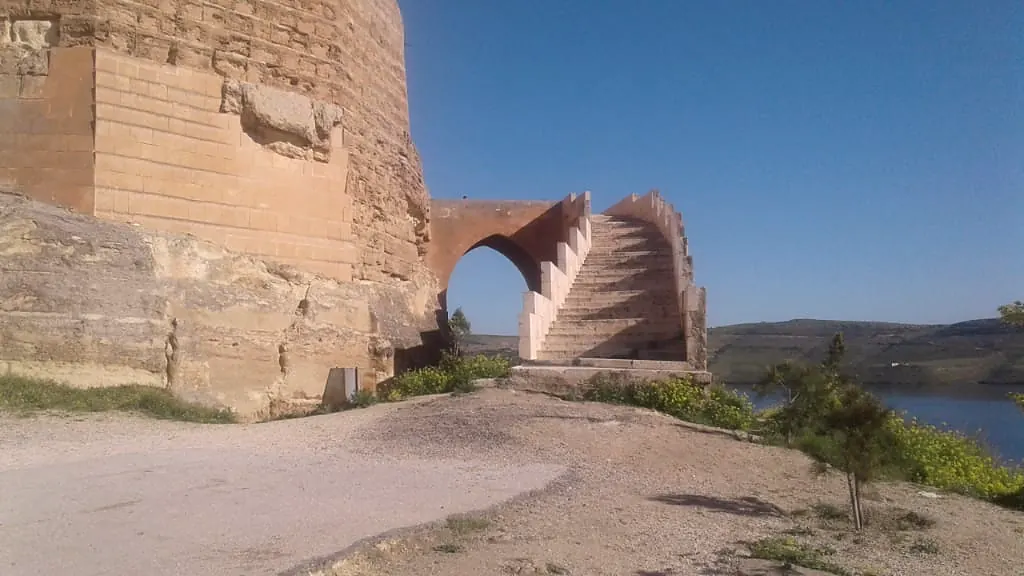
Al-Zahir rebuilds Qal'at Najm into its present form and adds a palace, a bath and a mosque. The dates are not inferred: they are carved in naskh in a band above the gate.
The invasions
The Mongol invasions of the later thirteenth and fourteenth centuries bring destruction to the castle.
A siege
An Arab warlord takes refuge in the castle. Ottoman forces besiege it, and it is damaged in the process.
Registered, with a perimeter
Qal'at Najm is registered among the archaeological sites of the Aleppo countryside by decision 126/A, with a protection perimeter of two hundred metres around it.
The Tishrin Dam closes
The reservoir rises. The islands, the ford and the line the bridge of boats took all go under. The castle keeps its height above the water and loses its reason.
The district changes hands
Manbij and its countryside change hands during the Syrian revolution. The castle comes through standing.
The south-eastern wall
The upper part of the defensive wall at the south-eastern corner partly collapses after a hard spring, and earlier repairs prove to have been poorly done. The Manbij antiquities directorate rebuilds the section in five stages.